First thoughts on Products and Materials

I have been struggling for the last couple of weeks, having got my first few posts up, they were in many ways the easy ones. Now it is getting more difficult as I get deeper into the subject so please be patient if the posts become a little more sporadic. I want to do this right. For me it is the ideas and thinking process that matters most. Let us look at a relatively simple product of a spectacles or glasses case. I have a number around the house and in handbags. Let me talk you through them and my thinking.
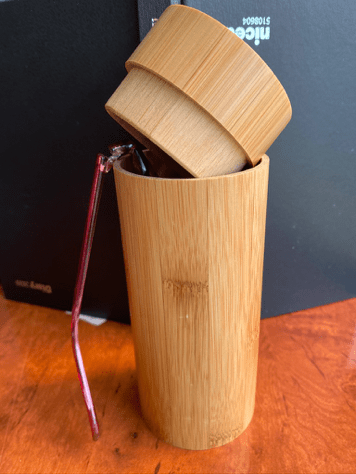
 I have a couple of these tall bamboo ones. I love the simplicity of the design and they take up very little space. They are robust, the only down side is they take up a lot of space for travelling. 

This next type is more compact. I am concerned I might crush it. It has hidden magnets in the area where my thumb is on the curved ends, the case will not stay open. Not great for a work environment where one minute I have my glasses on and the next off. I do like the fabric lining and the outside has a very tactile feel (see below).
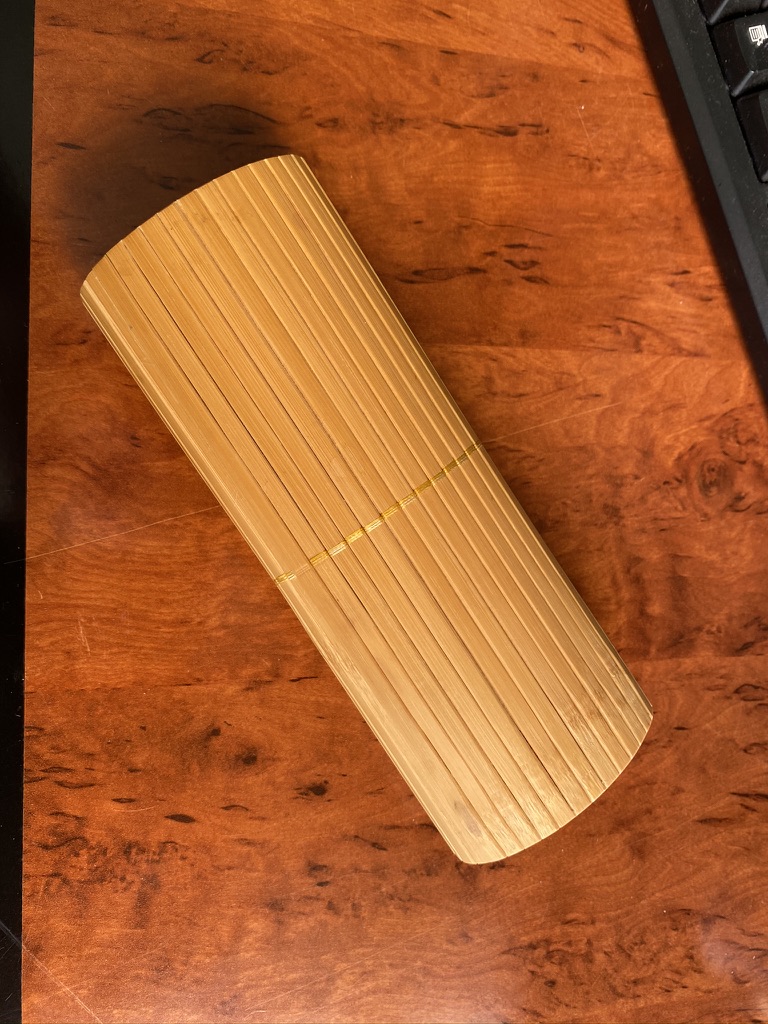
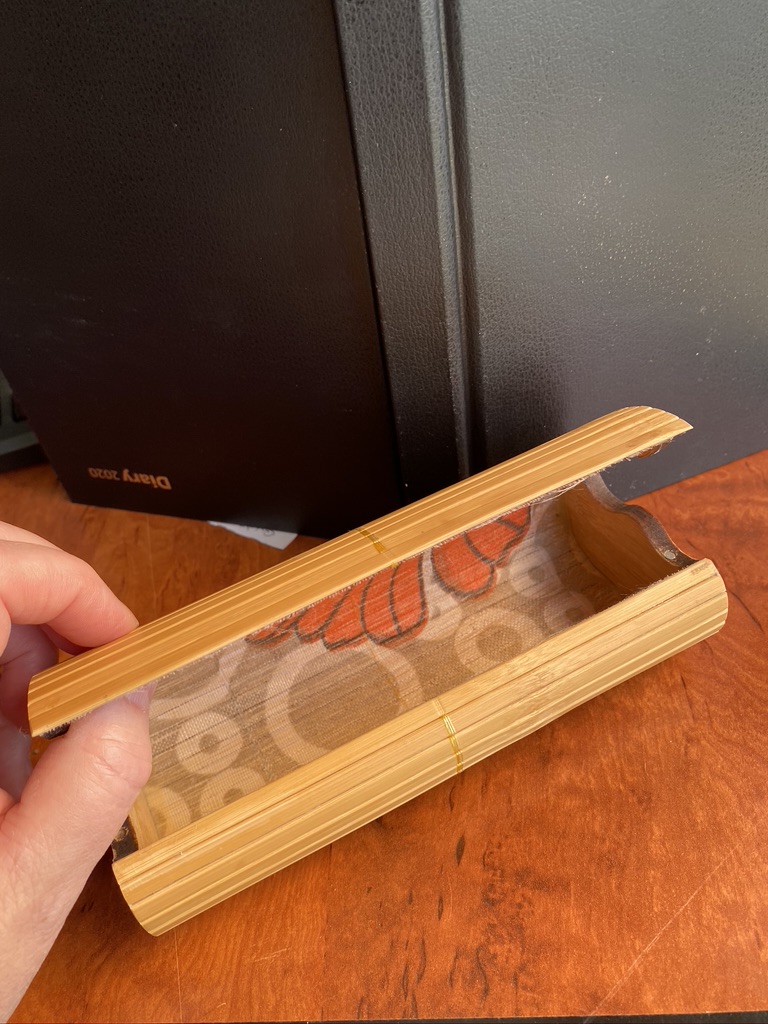
Case when closed
Case when open

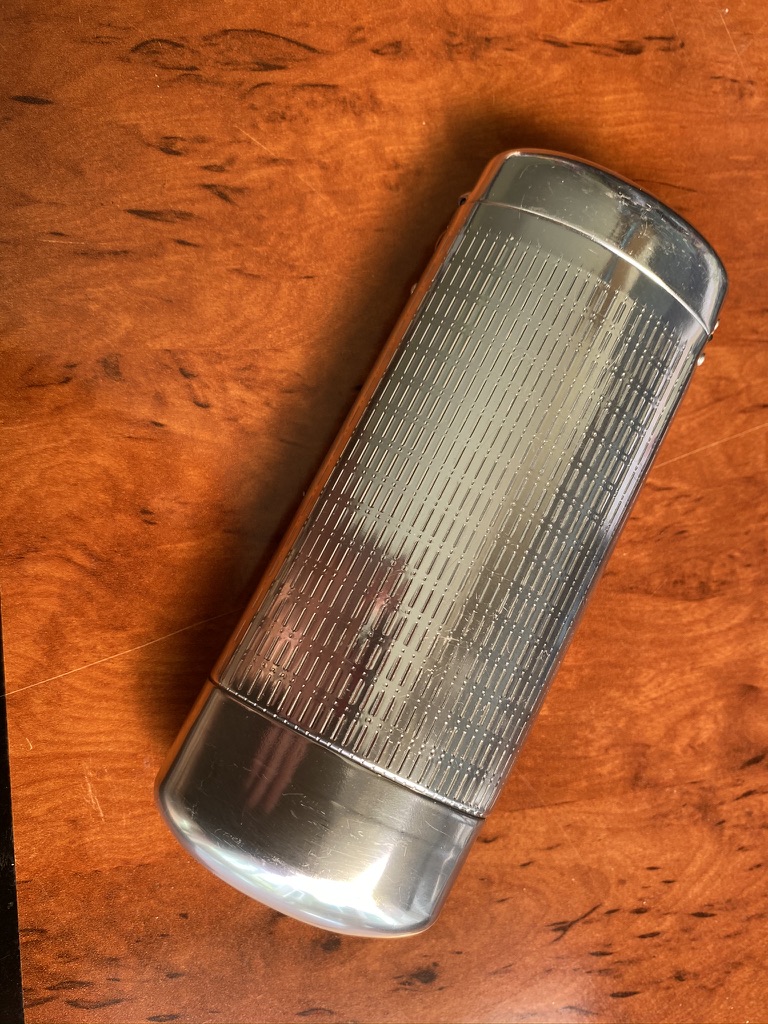
My standard for travelling is an aluminium case as below. This is very robust, holds my glasses and two pens so I can have everything to write my journal while I travel. At least if it was made of recycled Aluminium there would be no further mining impact. And since it is a stamped design there are no other impacts.
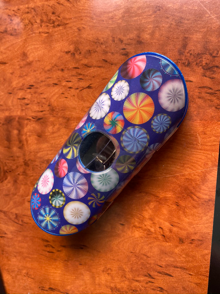
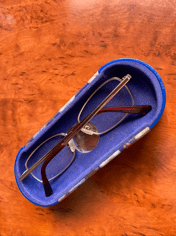
  The case on my desk is this plastic one, which I have been trying to replace for a while. The curved top and bottom swivel over each other and one part becomes the base and the top holds the glasses. Perfect for on my desk. I would love a similar design in bamboo – any offers anyone?

Now I have introduced you to these products you can start to see my (and potential customers) dilemmas. It is horses for courses. I travel a lot and so things that work for me at home may not work on the move. What if I had some sort of physical handicap, say could not grip things well. Actually, the only one that might work then is the fabric lined bamboo case. All the others can be fiddly to open. 

I could certainly see the site selling the bamboo cases and if made of recycled aluminium, the metal one as well.

What do you think?

Fabrics – first thoughts

I have also been doing some research on fabrics which has been an eye opener for me, especially cotton, which up to now was one of my favourite fabrics. I have found a great report on fashion fabrics which I will share when I have more to say on that. 

Fabrics that I am looking into are: linen, wool, flax and bamboo. There are some others which will take more research into the chemicals used in the manufacture. I am not against the use of chemicals as long as they are sustainable and reusable and can be safely disposed of when used. Dyes also pose these issues. While dyes can be natural materials such as ochre, some chemicals used are harmful. I am in particular thinking of leather dyeing which can be quite a toxic process. More on this later.
The Values

What I have been focussing on this week is to look at company values, company visions.

I like this quote from Gandhi:

Let your thoughts be positive for they will become your words. 

Let your actions be positive for they will become your values. 

Let your values be positive for they will become your destiny.

Let your words be positive for they will become your actions. 

― Gandhi

I have lookout at a few, having worked in the late 1990’s for Hewlett-Packard, I was familiar with the HP way. They started with a few ‘rules’ and let those rules guide them out of the garage where they started up to be one of the biggest computer companies in the world – I found this link quite interesting for not just those original values but how life has changed and those values forgotten. 

https://www.inflexion-point.com/Blog/bid/74097/5-Timeless-Principles-Revisiting-the-HP-Way

I also looked at Apple and the Steve Jobs presentation when he returned to Apple in 1997 when it was on the verge on bankruptcy. 

Steve Jobs 1997 MacWorld presentation on rejoining Apple

What I found interesting  about the Steve Jobs video, was that there was a need to collaborate and the need for a new board of directors – all existing Apple lovers – who could help rebuild not the brand but the business. And that meant getting close to traditional rivals such as Microsoft. Apple and Microsoft had a long running and very costly patent battle. Steve Jobs solved that and got $150M investment (non-voting shares) in Apple and worked with Apple to create MS Office on Mac.

This again shows how teamwork, a set of shared goals and collaboration with those with expertise outside the company is great. 

Then I looked at a video from the very successful Stanford University – How to Start a Startup set of YouTube videos – Lecture 10

Company Cultures – AirBnB and others

What I liked about this was it looked at two real world examples which talk about building company cultures.

Alfred Lin of Zappos opened the lecture and then lead a Q&A session with Brian Chesky of AirBnB. What I got out of this was how did these companies come up with their values. And Brian in particular struck a cord with me in that he said you needed to have people with the same values and beliefs as yourself. Also that they had to be so talented that you knew you had to raise your own game, I love that don’t you? And it seemed to Brian that actually being OK spending 18 hours a day together was a solid function of being on the same page (my words not his). And thinking about some of my closest friends, we might not communicate for years, but actually they still have the same values, the same commitments and the same concerns as I do. We can pick up where we left off. We know that they are people who will understand us at a fundamental level. And I want this blog to help me find a similar tribe of people who also share the ideas and values that the blog and eventually the company will hold in high regard.

I have spent a lot of time over the last few years understanding what my personal values and beliefs are. But should those be for the company as well? What is negotiable and what is not? The business model is certainly at this point negotiable but the values, mission and beliefs are not – at least not at this point. I feel (and please argue with me) at this point that if I can get these correct – those fundaments which should stand us in good stead for at least the near future – I am sure many will evolve as the company evolves and I certainly would expect them to be reviewed annually. If I can decide what those are – they will hopefully attract the right tribe around me at this point which will enable me to then start sparking ideas off and getting feedback from you all. Everyone has something to contribute – not just with a purchase but an idea – even if that idea is not for now – it may be for the future. It is the bold ideas – the strong ethics which enable us to stand first and push this idea forward.

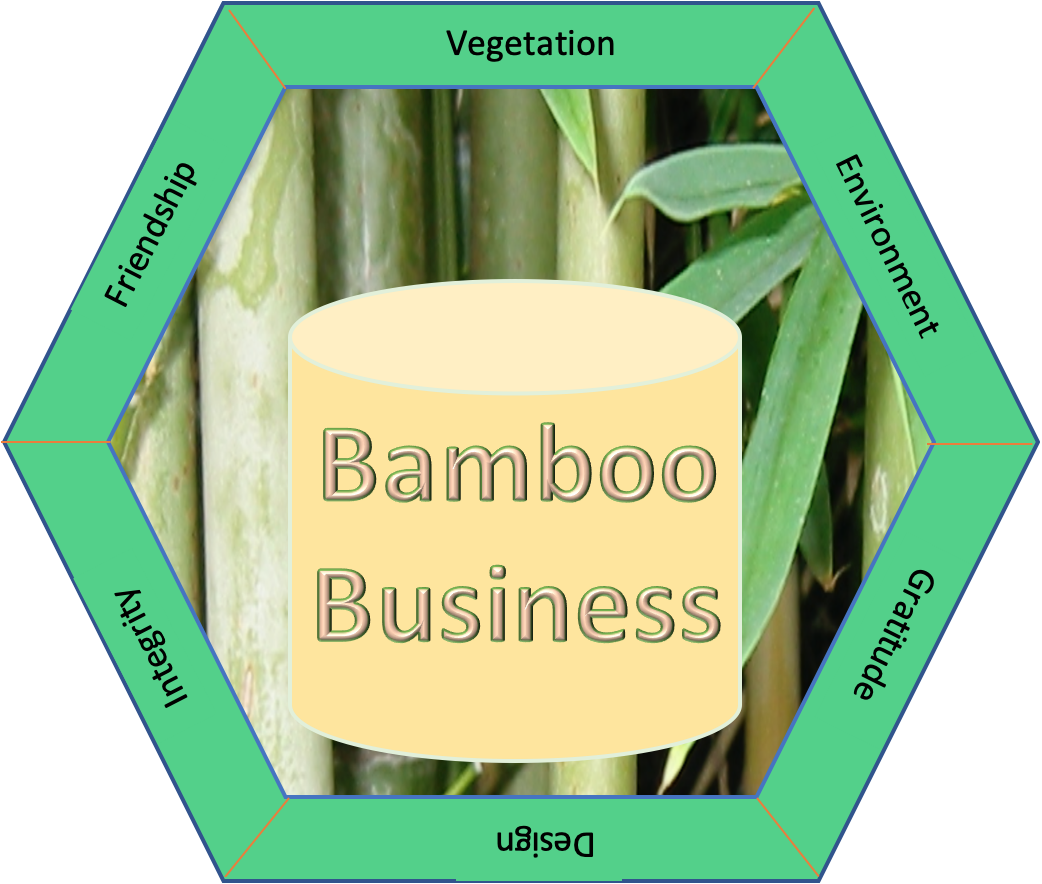
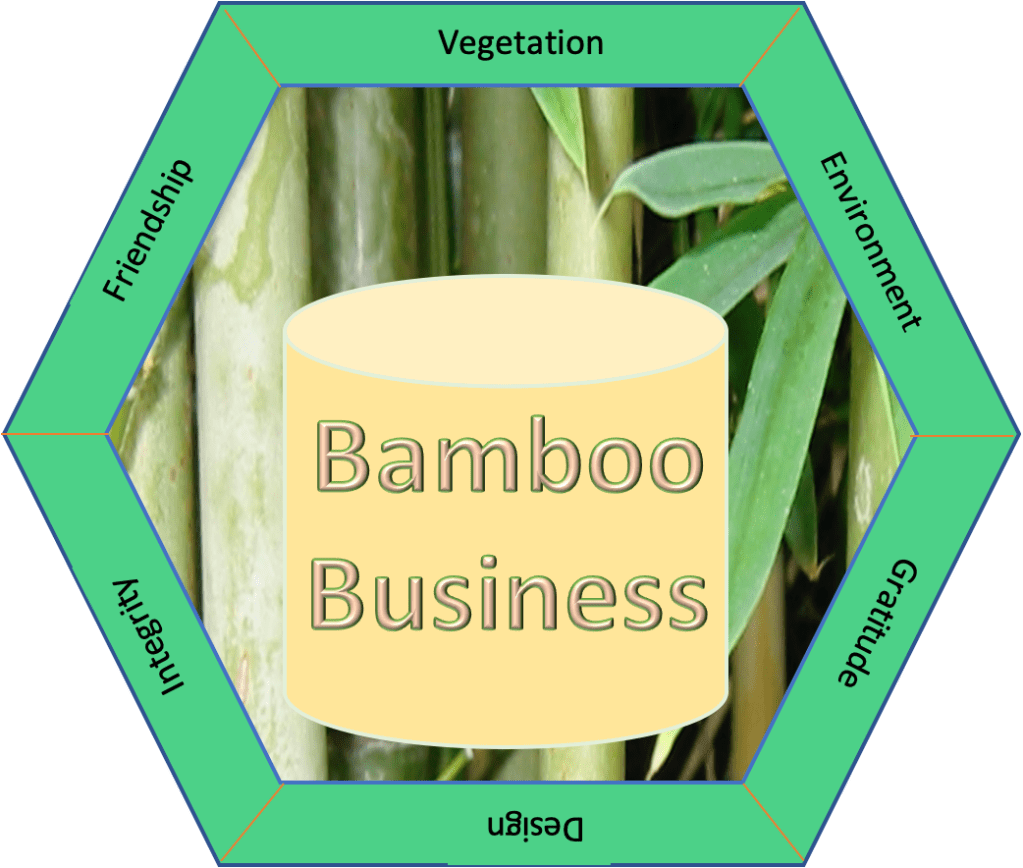
What have I learnt – there are a number of the words that seem to matter to me personally and I think these six words are key:

VEGETATION – without which we would have no products, or indeed be alive.

ENVIRONMENT– without nature we would not survive, nature needs to be appreciated to be helped and to be valued.

GRATITUDE – for the products, the producers and our whole community from the concept design to the delivered product.

DESIGN – great design – that make a difference in peoples lives and help the planet be rid of plastics and other destructive activities.

INTEGRITY – not just about honesty but about ethics and fairness and includes gratitude or the business, the producers, customers and most of all for nature and her gifts.

FRIENDSHIP – which for me embodies a number of emotions – happy, love, warmth, caring – creating a community of like-minded people.

And I have incorporated them into a logo which I think illustrates the above.

What do you think?

Featured

A Values-based Business

1. Sustainable – both in terms of itself as a business and of the products it will sell.

2. Values – for the company, society and the environment.

3. Ethical – in all aspects of the business.

4. Alleviates Poverty – to help those smaller producers to get to a market.

I am still formulating these ideas and what they mean.

Let me give you an example, a Woodturner in the UK, will often sell their crafted products at summer shows. Using the winter to make and the summer to sell often travelling around the country to a series of major agricultural or regional events. Competing with all the other sellers in the craft tent.

It is often a part-time job, requiring another source of income. 

Do we want to help them? Do they want to be helped? I would like to think so.

The costs and the sustainability will require their products to be small runs, not huge manufacturing runs. Consumers will have to understand that something available today may not be available tomorrow. 

Similarly with a village in Africa, if a set of suitable products can be shipped or air freighted and the margins benefit the poor in that society. Are we prepared to incur the pollution aspects of that shipping – I would say so, but would prefer that ships are used even if they then take a long time to arrive. Both for the business and in terms of returns for the village. 

We are,  therefore, in need of a clear set of Do’s and Don’t’s which will guide the business as its concepts develop. Both now and in the future. Business must change and adapt otherwise they die.

The Journey Begins

It Takes a Whole Village to Raise a Child – African Proverb

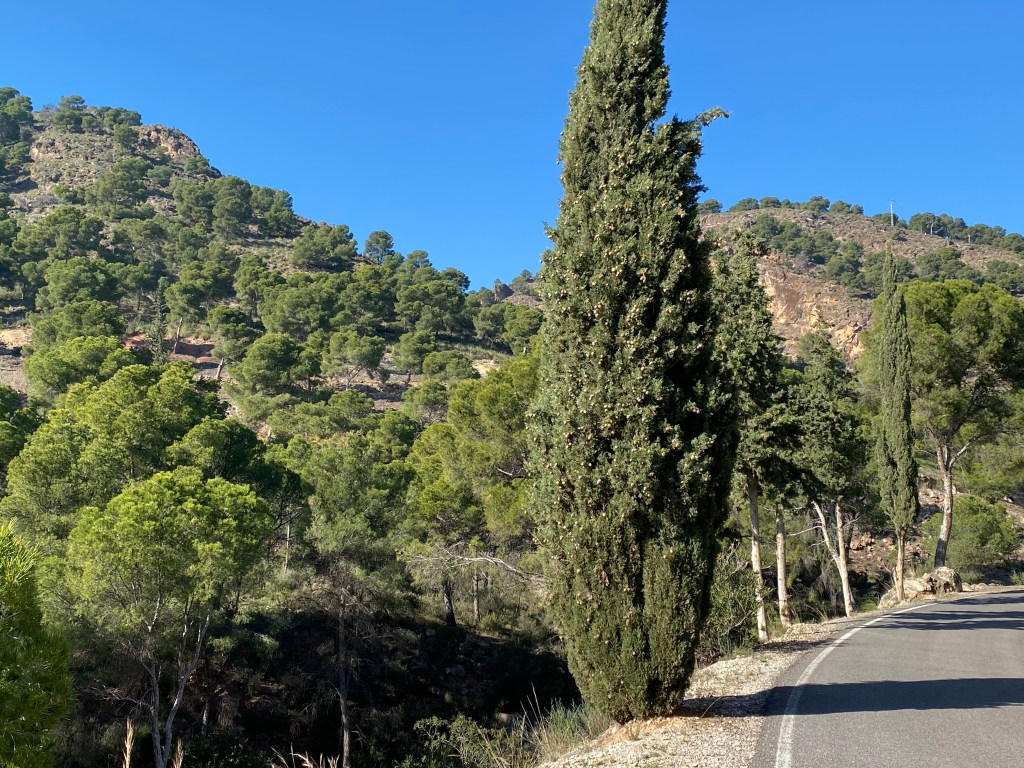
Sierra Espuna, Murcia, Spain

This blog is about my journey to create a sustainable business. As someone who has been involved with wildlife and ecosystems since childhood I understand the value of natural systems both for humans and wildlife. In medieval England each village would have had its own wood. A place for the village to obtain the resources it needed to build house and furniture, to gather herbs, fruits and nuts, to hunt deer and wood pigeons.

Today we obtain out needs via the Internet from global resources. Often without knowing or understanding the impact we ask of the resources from the location where our item has arrived.

I am on a journey to create a value-based enterprise, which will source sustainable products and encourage people to change from plastic to renewable and sustainably manufactured products and in the process help communities around the world to grow and prosper.

This is not a journey I want to do on my own. Perhaps you also have a similar ethos and value system? Perhaps you just think what I am trying to do is sensible and are interested to follow my journey. Let me know what you think. I am loath to have a Facebook or other social media, but welcome comments and ideas and indeed suggestions on things I might have overlooked.